Distribution of insecticide-treated nets (LLINs)
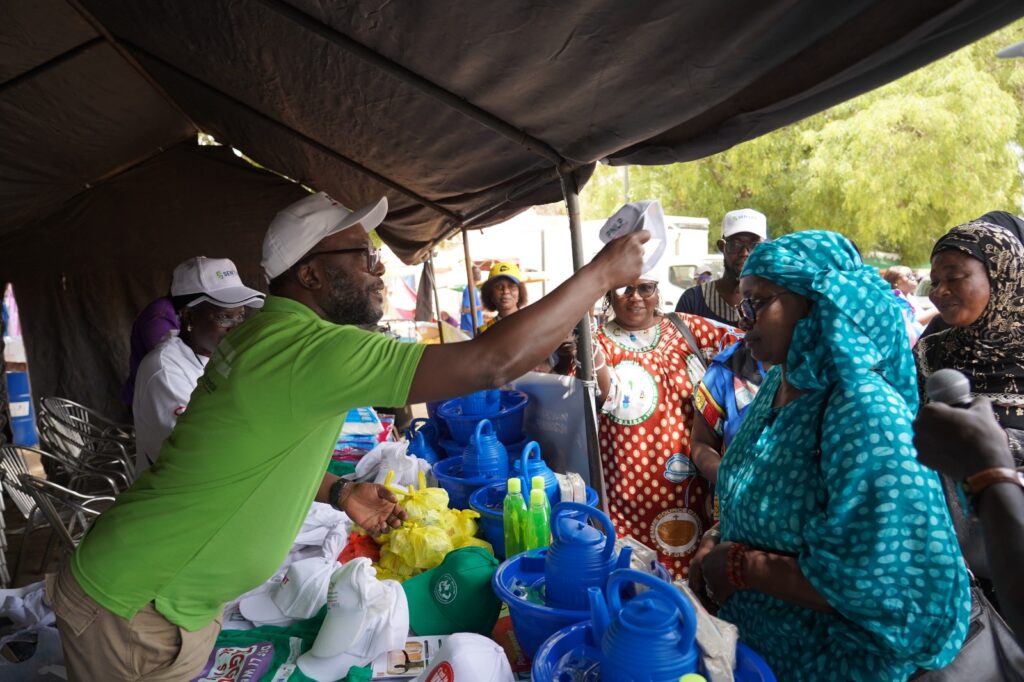
Long-lasting insecticidal nets handed out to households, both in mass campaigns and through routine distribution.
Reference year: 2025. Source: Annual epidemiological bulletin 2025.
Why this intervention
- Improve people’s access to prevention tools.
- Reduce malaria morbidity, particularly during the high-transmission season.
- Cover the entire border area through a campaign synchronised with the Gambia.
Who it is for
- Households registered in the mass campaign districts.
- People in regions not covered by the campaign, through routine distribution: notably Dakar, Saint-Louis, Thiès, Louga, Fatick and Diourbel.
- Border villages within 5 km of the Gambian border, on the Senegalese side.
How it works
- 1
Registration
Households are registered and the quantities to be handed out are validated on a digital platform.
- 2
Distribution
Community workers scan the QR code on the voucher to find the household and hand over its nets.
- 3
Monitoring
Digitisation strengthens the monitoring of field activities in every district; committees handle omissions and complaints.
What the campaign achieved
- 3,952,545 nets distributed out of 4,137,700 received from central level.
- Digitisation scaled up in every campaign district.
- Implemented in sync with the Gambia, with a shared data visualisation platform.
- 61% of households owned at least one insecticide-treated net in the latest national survey (DHS 2023).
On the same topic
Distribution de moustiquaires à Tambacounda : une initiative vitale contre le paludisme
Le quartier Plateau Afia II, situé à la périphérie de la commune de Tambacounda, a accueilli ce samedi une cérémonie de remise de moustiquaires imprégnées d’insecticide (MII) au profit des populations. Cette initiative,…
Read the article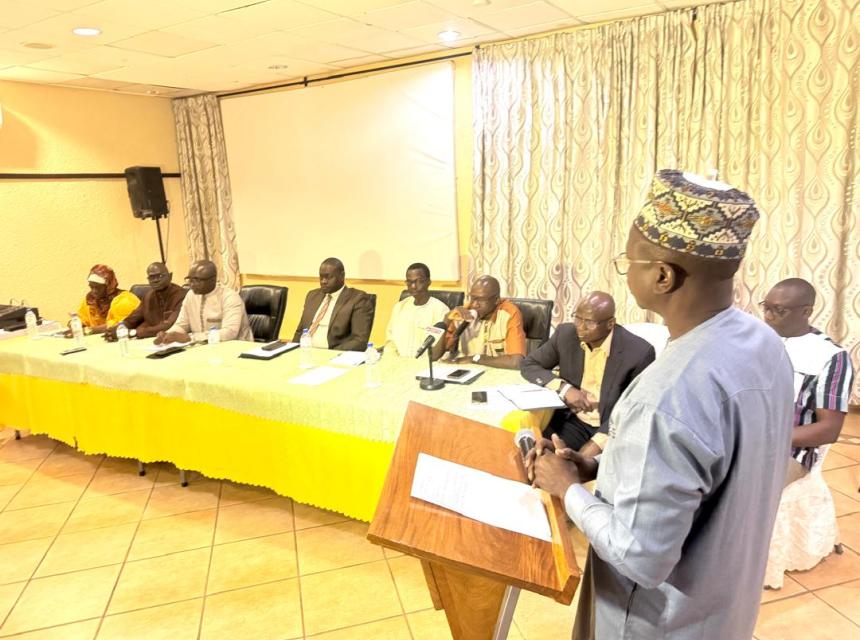 Campaigns
Atelier d’harmonisation des messages dans le cadre de la synchronisation de la CDM MII 2025
Pour l’année 2025, le Sénégal et la Gambie vont de nouveau organiser une campagne synchronisée de distribution de MILDA. Ainsi, pour déclencher et asseoir le processus de synchronisation, les deux programmes nationaux…
Read the article