Seasonal malaria chemoprevention (SMC)
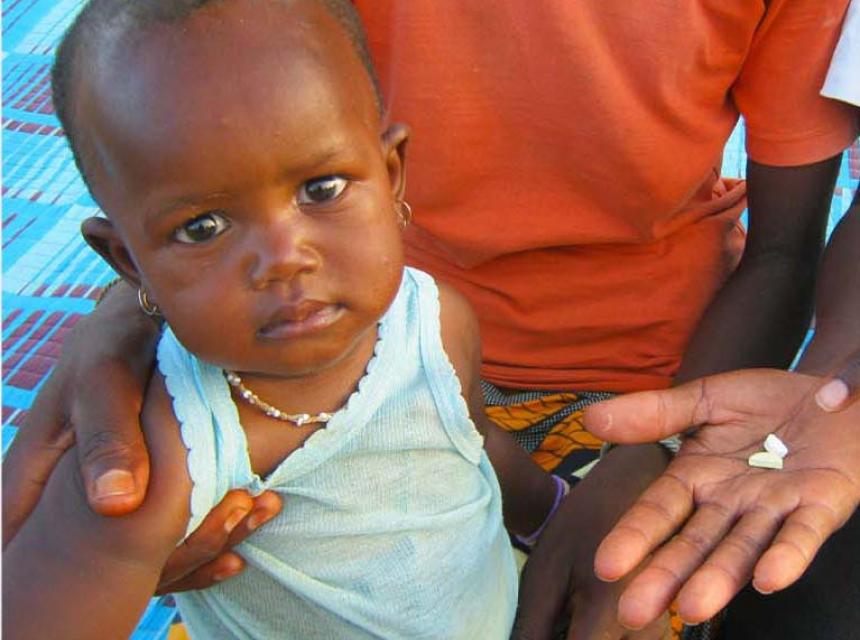
A free preventive treatment, given door to door, to protect children aged 3 to 120 months during the high-transmission season.
Reference year: 2025. Source: Annual epidemiological bulletin 2025.
Why this intervention
- Protect children during the period of high malaria transmission.
- Ensure all three doses are actually taken, through directly observed treatment (DOT).
- Match the number of rounds to the length of the transmission season in each district.
Who it is for
- Children aged 3 to 120 months, in three age groups: 3 to 11 months, 12 to 59 months and 60 to 120 months.
- Districts in five regions in 2025: Kolda, Kédougou, Tambacounda, Diourbel and Kaolack.
How it works
- 1
Door to door
Community health workers visit households and give sulfadoxine-pyrimethamine and amodiaquine (SP + AQ) free of charge.
- 2
Three observed doses
Since 2019, community workers have directly observed all three doses being taken (DOT1, DOT2, DOT3).
- 3
3 to 5 rounds
Depending on the district, 3 to 5 rounds are organised between June and October, together with pharmacovigilance and social mobilisation.
What the campaign achieved
- 706,109 children treated at DOT3, out of 732,518 children registered.
- Actual DOT3 coverage of 96.4% across all rounds.
- SMC data fully digitised in the 15 target districts.
- Campaign implemented with support from CRS and PATH.
On the same topic
 Campaigns
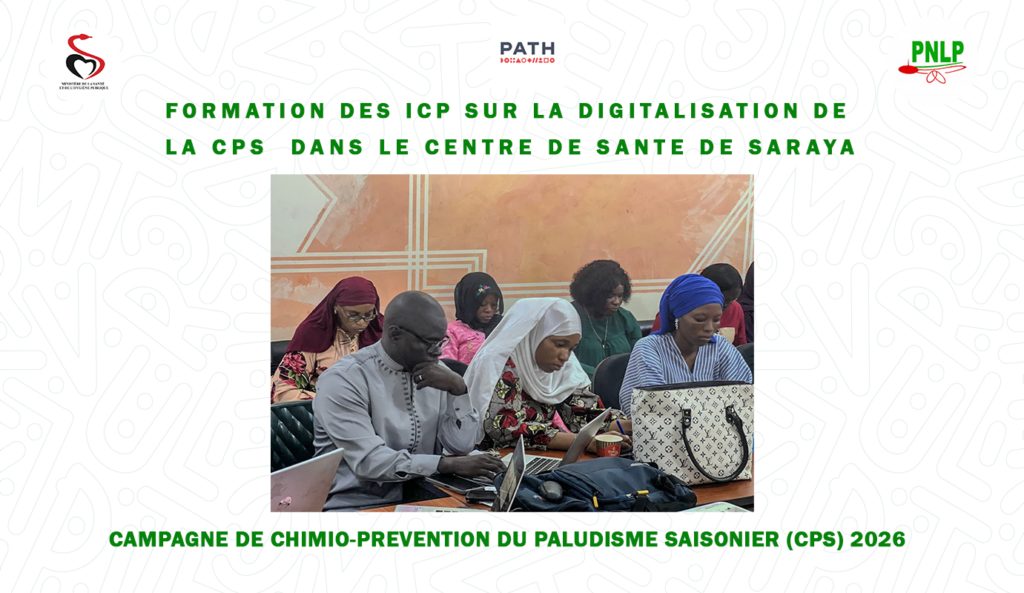
Formation des ICP sur la digitalisation de la CPS dans le centre de santé de Saraya
[vc_row][vc_column][vc_column_text]Dans le cadre du renforcement de la lutte contre le paludisme et de la modernisation des outils de collecte de données, le Programme National de Lutte contre le Paludisme (PNLP) a…
Read the article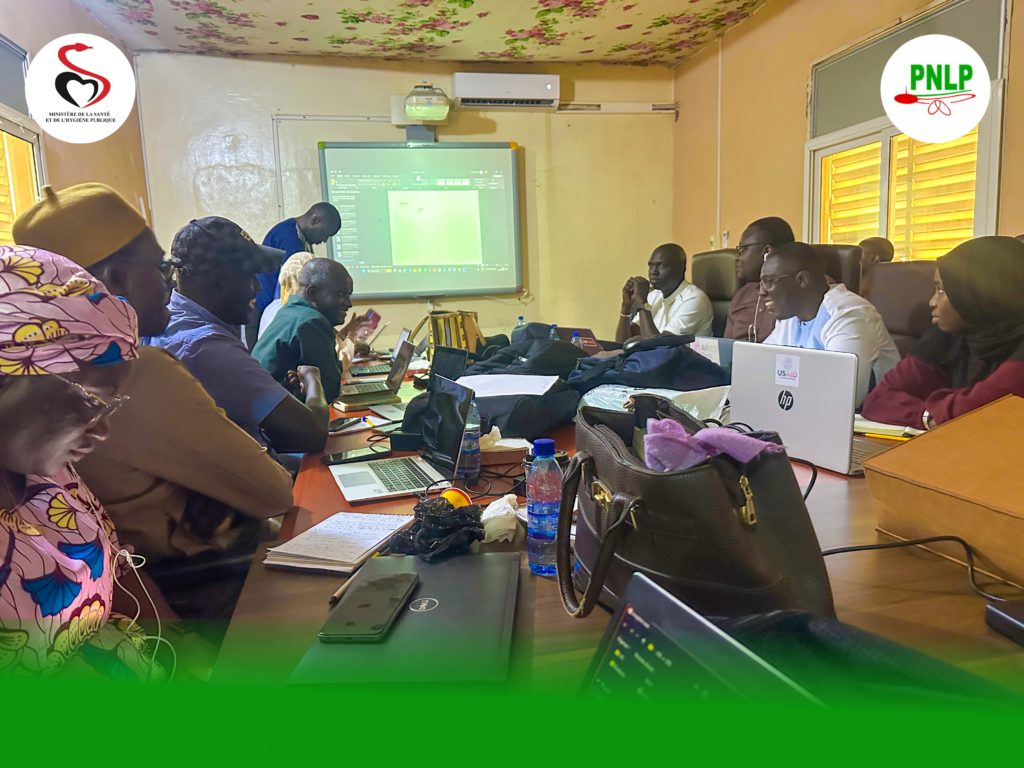 Campaigns
Kédougou : le PNLP oriente l’ERCS et l’ECD sur la digitalisation de la CPS 2026
Ce jeudi 2 juillet 2026, le Programme National de Lutte contre le Paludisme (PNLP) a réuni, dès 9h à la Salle de TRIPANO de la DRS de Kédougou, l’Équipe Régionale de Coordination de la Santé (ERCS) et les Équipes Cadres…
Read the article Campaigns
Campagne CPS 2025 – Couverture du Magal de Touba
Parce que les défis de santé publique nécessitent des réponses collectives, nous croyons fermement que les partenariats multisectoriels sont essentiels pour bâtir un avenir plus sain pour tous. À travers la campagne…
Read the article